Why Montessori Classrooms Look So Different from Traditional Ones
Apr 01, 2026
Families who visit
Montessori schools in Cypress, TX, often notice immediate differences in the classroom setting. Desks are not arranged in rows. Children move carefully between activities. Lessons are not delivered through long group lectures.
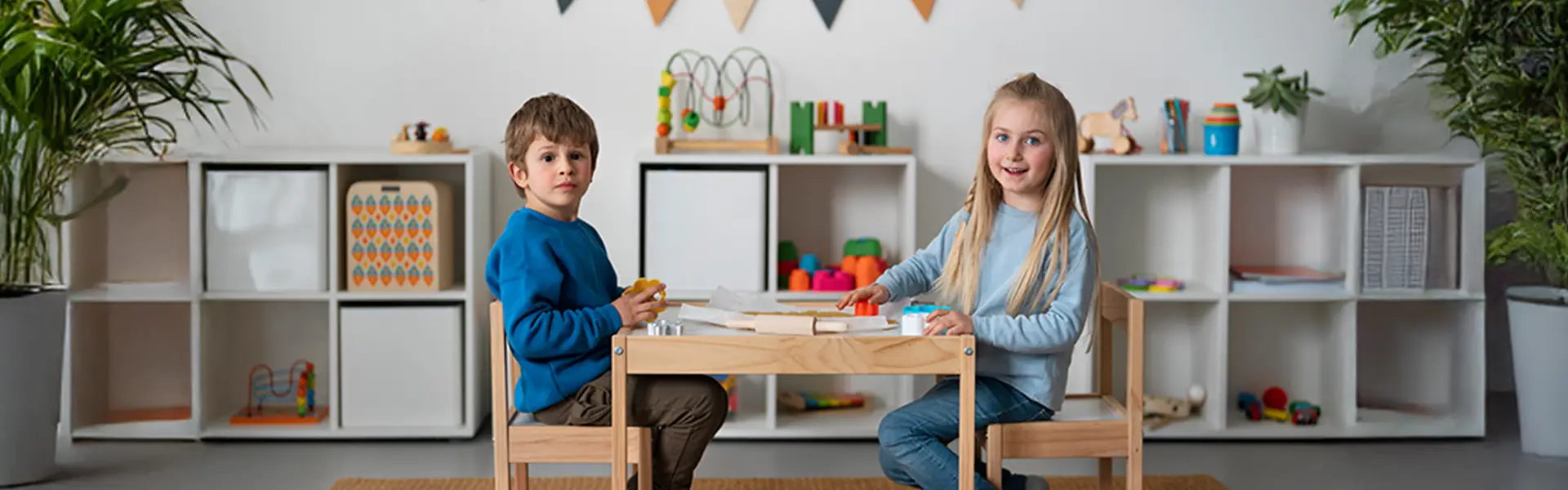
These differences reflect a classroom model structured around independent work and individual pacing. The physical environment influences how children approach tasks, manage materials, and sustain attention. Shelving, furniture size, and open floor space are arranged to match developmental stages rather than adult convenience.
Understanding these design choices helps clarify why Montessori classrooms appear distinct from traditional educational spaces.
A Room Designed for Independence
Montessori classrooms are intentionally prepared to match children’s physical and cognitive abilities. Tables and chairs fit a child’s height. Open shelving keeps materials visible and accessible. Clear pathways allow students to move without disturbing others.
Open shelves hold learning materials within easy reach. This accessibility allows children to select work without waiting for instructions. After completing a task, each item is returned to its designated place.
Daily routines reinforce responsibility. Children practice carrying trays carefully, rolling out floor mats, and restoring order before beginning a new activity. These repeated actions strengthen coordination and self-management.
A carefully organized Montessori learning center reduces unnecessary distraction and helps maintain consistent focus throughout the work cycle.
Why There Are No Assigned Desks
In many traditional classrooms, assigned desks help manage seating and structure. Montessori settings rely instead on clear expectations and predictable routines.
Children choose where to work based on the material selected. Some activities are completed at small tables. Others require floor mats to allow space for movement. The choice remains purposeful and connected to the task.
Completing one activity before beginning another reinforces attention and follow-through. Children learn to respect shared space by walking carefully around others’ work areas.
The absence of fixed seating does not remove structure. It shifts responsibility from external direction to internal discipline developed through practice.
The Purpose Behind the Learning Materials
Montessori materials focus on teaching one concept at a time so children can understand each skill step by step. Learning begins with concrete experiences before gradually moving toward abstract understanding.
For example:
- Counting beads introduces quantity before written numbers
- Sandpaper letters connect sound recognition with tactile memory
- Practical life activities strengthen fine motor coordination
Many materials allow students to identify errors independently. When a mistake occurs, the design of the material provides feedback without immediate adult correction. Teachers observe progress, assess readiness, and present new lessons when appropriate.
In environments described as
Montessori for infants, spaces are arranged to encourage safe movement, sensory exploration, and early coordination. Even at this stage, careful preparation supports purposeful activity rather than passive supervision.
Understanding the Mixed-Age Classroom
Montessori classrooms commonly group children within a three-year age range. This structure creates continuity and stability over time.
Younger students observe older peers completing tasks independently. Older children reinforce their understanding by demonstrating skills when appropriate. This interaction strengthens both academic knowledge and social development.
Progression depends on readiness rather than age alone. Each child advances through materials at an individual pace while remaining part of a consistent community.
Families exploring a Montessori daycare in Cypress, TX
, often notice how mixed-age classrooms encourage patience, cooperation, and shared responsibility.
Why the Classroom Feels Calm and Ordered
Order plays a central role in Montessori education. Only a limited number of materials are available at one time, and each item has a designated location. Clear expectations guide how materials are handled and returned.
Predictable routines contribute to a steady classroom rhythm. Students understand when to begin work, how to transition between tasks, and how to restore the environment afterward.
Teachers model respectful communication and address conflicts through structured guidance. Movement remains deliberate rather than hurried.
When the environment remains organized and expectations remain consistent, children can concentrate for extended periods without frequent interruption.
What This Means for Your Child
A Montessori classroom nurtures academic skills while reinforcing independence and responsibility. Direct interaction with materials encourages active participation in learning.
Over time, children develop the ability to:
- Sustain attention on a chosen task
- Complete work before transitioning
- Maintain shared spaces responsibly
- Follow consistent routines
These habits extend beyond the classroom. The structured environment reinforces practical skills alongside literacy and numeracy development.
Rather than relying solely on teacher-led instruction, students engage with lessons through exploration and repetition. This process builds familiarity, accuracy, and confidence.
Final Thoughts
Montessori classrooms appear different because their organization follows a specific educational philosophy. The classroom layout reflects developmental needs. Materials are presented systematically. Movement is structured and purposeful.
Lycee Montessori School offers programs for Infants, Toddlers, Primary, Kindergarten, Before & After Care, a Summer Program, and Daycare. Each program follows the prepared-environment principles outlined above.
For families evaluating educational options, understanding the reasoning behind the classroom structure provides clarity about how Montessori education approaches independence, focus, and steady growth.