10 Core Principles of Montessori Education (A Guide for Parents)
May 01, 2026
Introduction
Choosing the right early learning environment is critical to a child’s development. The Montessori philosophy focuses on how children grow, learn, and develop independence through guided exploration.
Families exploring a preschool in Cypress, TX, frequently encounter Montessori programs because they emphasize individualized learning and long-term developmental growth. Learning the core principles behind this approach can help you decide if it aligns with your child’s needs and your educational goals.
1. Child-Centered Learning Comes First
Montessori education is built around child-centered education, where each child’s interests, pace, and developmental stage guide the learning process. Instead of a one-size-fits-all curriculum, children engage with subjects that naturally interest them.
This approach builds confidence and keeps children motivated to learn without pressure or comparison.
2. Learning Through Hands-On Experiences
A defining feature of the
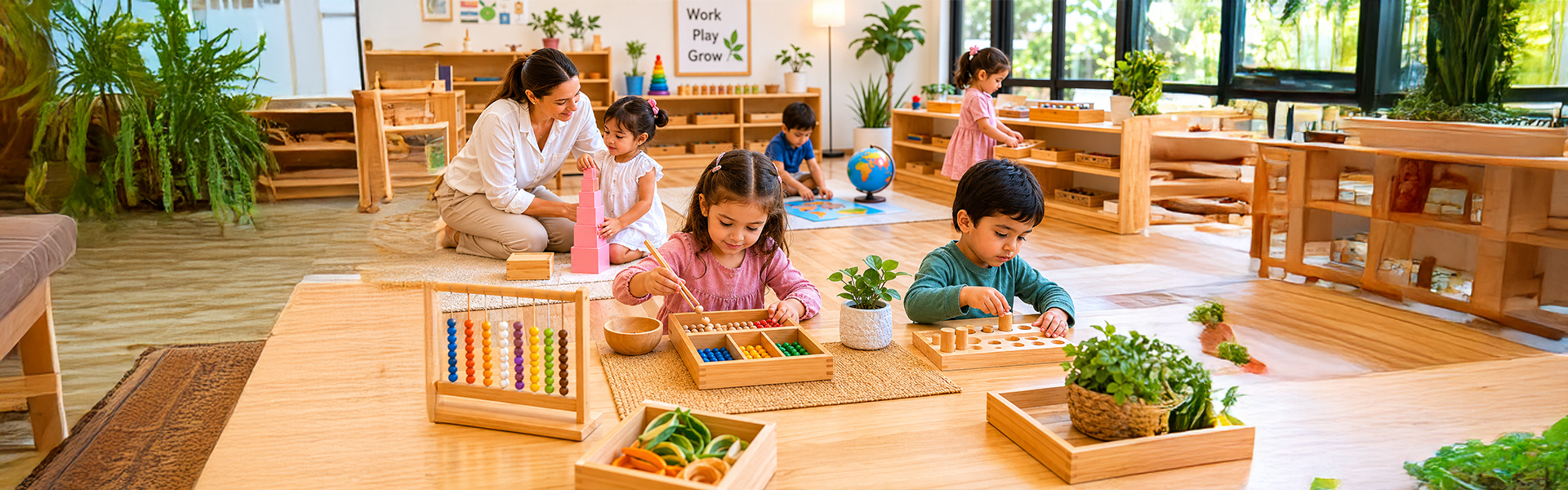
Montessori learning approach is its emphasis on active engagement. Through hands-on learning in Montessori, children use specially designed materials to explore concepts in math, language, and practical life.
This method enables children to learn by doing, which strengthens understanding and memory retention.
3. Independence Is Encouraged Early
The importance of independence in children remains a key principle in Montessori classrooms. From choosing activities to managing simple daily tasks, children are given opportunities to take responsibility for their actions.
This process strengthens decision-making skills, self-confidence, and a sense of accountability that supports long-term success.
4. Prepared Environment Supports Growth
Montessori classrooms are intentionally structured to promote exploration and independence. Every material has a purpose and is placed within a child’s reach.
This structured environment reinforces Montessori teaching methods, allowing children to move freely, choose activities, and learn without constant adult direction.
5. Teachers Act as Guides, Not Lecturers
In Montessori settings, teachers observe and guide rather than instruct in a traditional sense. They introduce concepts when a child is ready and provide support without interrupting independent learning.
This approach strengthens critical thinking as well as problem-solving skills, aligning with effective early childhood development methods.
6. Focus on Holistic Development
Montessori education focuses on developing the whole child—academically, socially, emotionally, and physically. This aligns with the concept of holistic education for kids, where learning extends beyond academics.
Children build communication skills, emotional awareness, and collaboration through daily interactions and structured activities.
7. Mixed-Age Classrooms Encourage Collaboration
Montessori classrooms group children of varied ages together. Younger children learn by seeing and observing older peers, while older children reinforce their knowledge by helping others.
This dynamic encourages leadership, empathy, and social development in a natural and supportive setting.
8. Freedom Within Limits
Children have the freedom to choose their activities within a structured framework. This balance teaches responsibility while maintaining order in the classroom.
It also allows children to understand boundaries while still feeling confident in their choices.
9. Focus on Intrinsic Motivation
Rather than relying on rewards or grades, Montessori promotes finding satisfaction in the learning process itself.
When motivation comes from within, children develop a lasting interest in learning rather than depending on external rewards.
10. Real-World Skills Are Prioritized
Montessori education includes practical life activities such as organizing, cleaning, and self-care. These experiences strengthen independence and prepare children for everyday responsibilities.
Parents comparing Montessori vs traditional education often notice that Montessori places greater emphasis on real-world readiness alongside academic development.
Why Parents Are Choosing Montessori in Cypress, TX
Families exploring
Montessori schools in Cypress, TX tend to choose programs that prioritize individualized attention and meaningful learning experiences. At Lycee Montessori School, the focus is on creating a highly supportive environment where children feel confident, capable, and curious.
Whether you are considering a daycare in Cypress, TX, or a long-term academic path, Montessori education provides a strong foundation that supports independence, creativity, and growth.
Schedule a Tour and See the Difference
Experiencing a Montessori classroom firsthand can provide valuable insight. At Lycee Montessori School, parents are invited to visit, observe, and understand how the approach works in real time.
If you are considering a Cypress Montessori program for your child, scheduling a tour offers a clear understanding of the environment and allows you to ask meaningful questions about your child’s development.
Frequently Asked Questions