
Inside STEAM Preschool Program: What Toddlers Actually Build and Learn
Choosing a preschool in Cypress, TX often raises a practical question for parents: what will my toddler actually do and learn? For young children, STEAM concepts develop through movement, observation, building, sorting, creating, and experimentation. In a Montessori environment, purposeful materials allow toddlers to investigate these ideas through activities suited to their developmental abilities.
Key Takeaways
- Toddlers encounter early science by using their senses and noticing changes.
- Building activities introduce balance, size, position, and spatial relationships.
- Simple tools help children understand how objects accomplish practical tasks.
- Art, music, and movement encourage creativity and self-expression.
- Sorting, matching, and sequencing introduce early mathematical ideas.
- Repeating activities gives toddlers practice with persistence and completing tasks independently.
STEAM Starts With Everyday Toddler Experiences
Science, technology, engineering, arts, and mathematics may sound advanced for a two-year-old, yet their foundations can emerge through ordinary activities. STEAM learning for toddlers may happen when a child compares objects, transfers water between containers, fits pieces together, arranges items by size, or tests a different way to complete a task.
These activities align with Montessori principles that emphasize direct interaction with materials and the surrounding environment. The school’s toddler program serves children ages 18 to 36 months and incorporates sensory experiences, communication, movement, practical tasks, and opportunities to practice independence.
Science Develops Through Observation and Curiosity
Young children investigate their surroundings through sight, touch, sound, and movement. Early science activities can encourage them to recognize differences and begin connecting an action with what happens next.
The school’s STEAM approach incorporates inquiry, nature, observation, and real-world discovery. Within play-based STEAM education, children can investigate simple questions through activities rather than being expected to memorize scientific facts.
Engineering Emerges Through Building and Testing
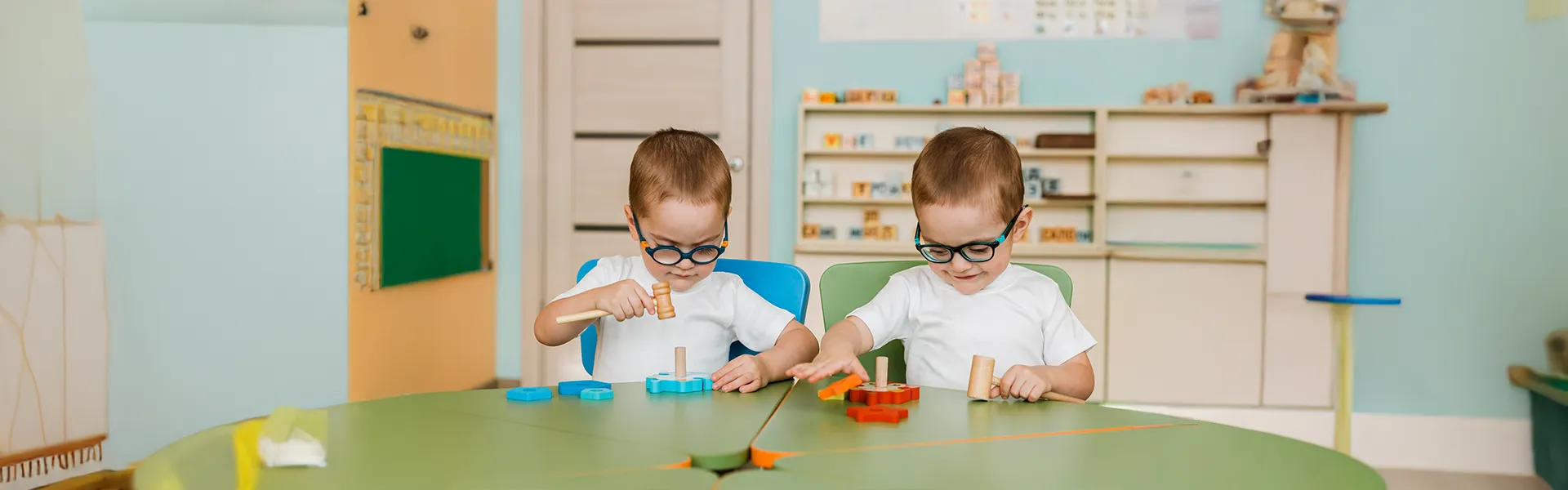
When toddlers stack or arrange materials, they encounter basic ideas about balance, size, shape, and position. If a structure falls, rebuilding allows them to change the arrangement and try another solution.
Such challenges can encourage problem-solving skills for toddlers as they notice what did not work and make another attempt. The process matters more than producing a particular result.
Activities may include:
- Stacking and arranging objects
- Matching pieces with appropriate spaces
- Comparing shapes and sizes
- Completing simple sequences
- Pouring or transferring materials
- Trying a task again with a different approach
Technology Can Begin With Simple Tools
Technology in early learning extends beyond computers and tablets. A child using a pitcher, tongs, or another simple tool can begin to understand that objects have specific purposes.
Within a STEAM preschool curriculum, simple tools and sequencing activities can introduce the idea that tools help accomplish particular tasks. These practical experiences also give toddlers practice with coordination, order, and simple sequences.
Art Encourages Creativity and Expression
Drawing, painting, clay, music, and movement give children different ways to work with materials and express ideas. These activities do not always require one predetermined outcome, leaving room for experimentation and individual choices.
Within early childhood education, creative activities can also support coordination and give children opportunities to communicate ideas through movement, sound, shapes, and materials.
Math Begins With Concrete Experiences
Toddlers can develop early mathematical awareness through experiences involving quantity, size, shape, patterns, and order. Matching similar objects, arranging materials in sequence, comparing sizes, and recognizing simple quantities provide concrete introductions to mathematical relationships.
At this age, children do not need abstract equations to encounter math. Moving, sorting, comparing, and recognizing patterns can introduce concepts that children encounter in more complex forms as they grow.
What Parents Can Look for in a STEAM Classroom
When evaluating a STEAM preschool in Cypress, parents can consider whether the classroom includes age-appropriate materials, freedom of movement, purposeful choices, attentive guidance, and enough time for children to revisit activities.
Questions worth asking include:
- Can children access appropriate materials independently?
- How do teachers respond when a child struggles?
- Are science and math concepts introduced through concrete activities?
- Is creative expression part of the classroom experience?
- How are activities adapted to different developmental stages?
Independence Is Part of Everyday Learning
Toddler development involves more than early academic concepts. Communication, coordination, social interaction, emotional development, and independence are also important. For families comparing options for toddler preschool in Cypress, observing everyday classroom routines can be as informative as reading a program description. Choosing an activity, focusing on a manageable task, and trying again after difficulty can give toddlers practice with persistence and independence.
See STEAM Learning in the Classroom
Lycee Montessori School serves toddlers ages 18 to 36 months at its Cypress campus in a Montessori environment centred on purposeful activity, choice, and age-appropriate independence. A classroom visit allows families to observe the materials, routines, and teacher-child interactions firsthand.